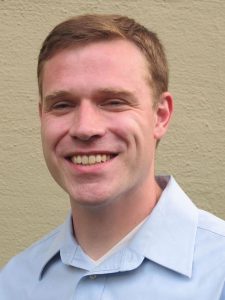
 When Greg Bowman presents a slideshow about the proteins he studies, their 3D shapes and folding patterns play out as animations on a big screen. As he describes these molecules, it might be easy to miss the fact that he can’t really see his own presentation, at least not the way the audience does.
Bowman, PhD, an assistant professor of biochemistry and molecular biophysics at Washington University School of Medicine in St. Louis, is legally blind. He also now leads one of the largest crowd-sourced computational biology projects in the world. The effort is aimed at understanding how proteins fold into their proper shapes and the structural motions they undergo as they do their jobs keeping the body healthy. Proteins are vital cellular machinery, and understanding how they assemble and function — or malfunction — could shed light on many of the most vexing problems in medical science, from preventing Alzheimer’s disease, to treating cancer, to combating antibiotic resistance. (more…)

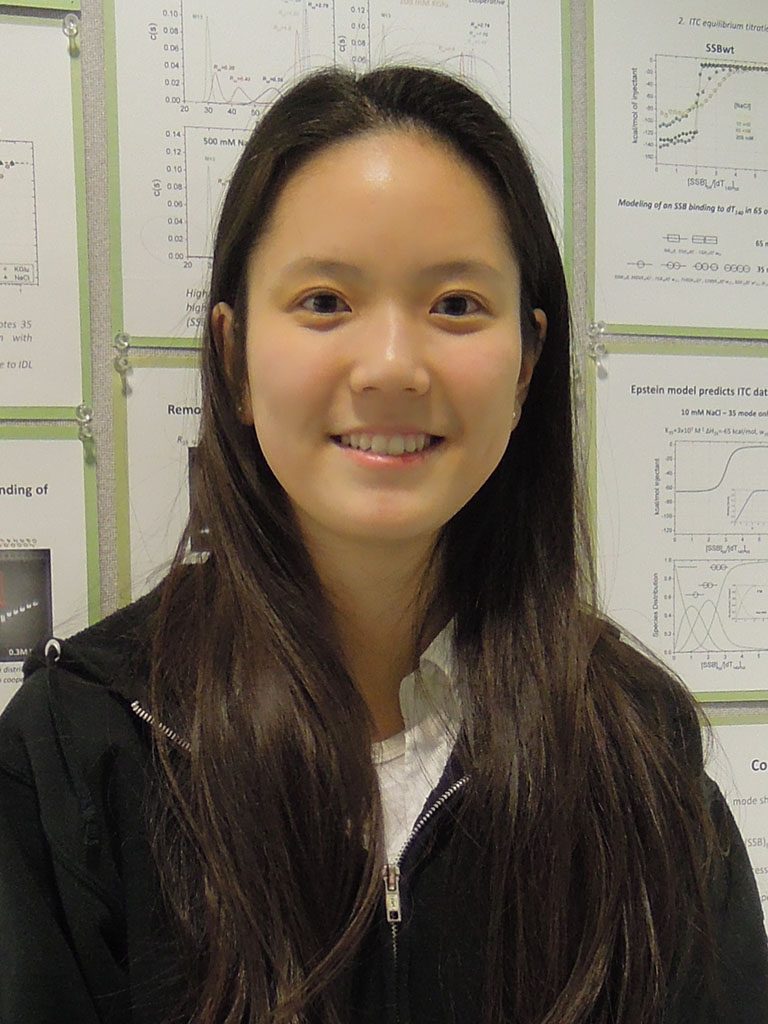 Congratulations to Min Kyung Shinn, whose poster at the 2019 Biophysical Society was recognized with a Student Research Achievement Award (SRAA). The SRAA Poster Competition is open to all BPS Student members who are presenting posters at the Annual Meeting. Students must register for this event when they submit their abstract in one of nine subject categories. The SRAA Poster Competition involved over 300 participants this year, a Society record.
 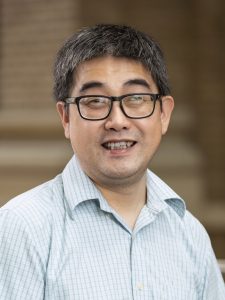 The Board of Trustees voted at their March 1st, 2019 meeting to award tenure in the Department of Biochemistry and Molecular Biophysics to
  When Greg Bowman presents a slideshow about the proteins he studies, their 3D shapes and folding patterns play out as animations on a big screen. As he describes these molecules, it might be easy to miss the fact that he can’t really see his own presentation, at least not the way the audience does.