
Molecular determinants of evolutionary conservation in disordered protein regions
March 16th, 2022 – Alex Holehouse, PhD, Assistant Professor of Biochemistry and Molecular Biophysics along with Dolf Weijer, PhD, Associate Professor in Laboratory of Biochemistry from Wageningen University and Research, and Hyun Lee, PhD, Assistant Professor of Biochemistry from University of Toronto, received a new three-year grant award from Human Frontier Science Program for their research entitled “Molecular determinants of evolutionary conservation in disordered protein regions”.

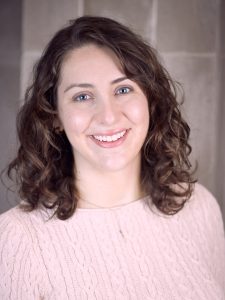 Jennette received her bachelor’s degree from Kenyon College in Gambier, Ohio. In 2016 she joined the Plant and Microbial Biosciences Program in the Division of Biology and Biomedical Sciences at Washington University. She is completing her thesis research in the laboratory of Dr. Elizabeth Haswell, where she works to elucidate mechanical signal transduction pathways in plants. Using a combination of proteomic and genetic screens in the model plant Arabidopsis thaliana, Jennette uncovered a novel connection between a plasma membrane mechanosensitive ion channel, MSL10, and proteins that tether the ER and the plasma membrane together. She has shown that MSL10 influences the morphology of ER-plasma membrane contact sites.
 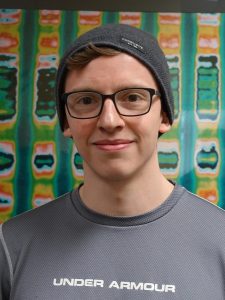 Ryan went to the University of Minnesota – Twin Cities for undergrad where he completed a double major in Plant Biology and Genetics, Cell Biology, & Development. Ryan joined the Plant and Microbial Biosciences program in the Division of Biology and Biomedical Sciences at Washington University in St. Louis in 2017. Ryan joined the lab of Dr. Lucia Strader for his thesis work. Upon the Strader Lab moving to Duke in 2020, Ryan became co-advised by Dr. Alex Holehouse. Ryan’s thesis work covered a wide-range of areas including plant hormone crosstalk, biomolecular condensates in plants, and the role of protein disorder in condensate formation. Ryan finished his Ph.D. in December 2021.