
Snapshot of a Scientist
As a five-year-old child, Dr. Linda Pike explored the cellular world through the eyepiece of a microscope and learned about chemical reactions involved in photo film development. Her lifelong love of chemistry was influenced by her father, a chemical engineer, who had Linda memorizing chemical names and symbols before kindergarten. At a very young age, Pike was destined to be a scientist.
“My father did photography as a hobby, and he used to take us down to the dark room with him,” Pike said. “We would watch the film develop and then the pictures coming up out of the dark. It was like magic.”
From the time she finished high school, she was driven to study the interface of biology and chemistry. A few years into her undergraduate education in chemistry at the University of Delaware, Pike set her goals on obtaining her PhD and becoming an academic professor. And that is exactly what she did.
She went on to obtain her PhD in biochemistry at Duke University and study -adrenergic receptors under the mentorship of Nobel Laureate Dr. Bob Lefkowitz as one of his first graduate students. This experience was the start of her lifelong interest in hormone receptors.
After earning her PhD, she moved to Seattle to start a postdoctoral fellowship with Nobel Laureate Dr. Ed Krebs at the University of Washington. She remembers her first day vividly as it was the day Mount St. Helens erupted. Years later, this eruption is still described as the most disastrous volcanic eruption in US history. The eruption column, consisting of ash and rock fragments, rose more than 15 miles into the air above the volcanic vent and deposited ash in 11 US states and two Canadian provinces.
“When I was on the plane to Seattle, we had to detour around the ash cloud from Mount St. Helens, and I remember flying by and seeing the rising ashes,” Pike said.
However, this experience did not deter her from doing seminal work on protein phosphorylation and hormone receptors during her postdoctoral training. After the completion of her postdoctoral fellowship, Pike started her own lab that focuses on the structure-function relationships of the epidermal growth factor receptor (EGFR) and its signaling cascade. She studies the canonical outside-in signaling that occurs after ligand binding but is also interested in the less well characterized inside-out signaling phenomena that cells use to adjust their signaling potential.
Pike’s work on the structure-function relationship of the EGFR and other hormone receptors throughout her career is the kind of basic science that fuels drug development used for treatment of hormone-sensitive cancers.
When asked how her work contributes to the broad field of medicine she said, “I do basic research. It is similar to when your car breaks down, and your mechanic needs to know how a car works when it’s fully functional so that they can diagnose the problem. I’m interested in figuring out how things work when they’re working normally, and that is going to enable us to intervene when things go wrong.”
Pike has not only made contributions to science, but she has been committed to mentoring young and aspiring scientists from the beginning of her professorship. In 1990, Pike along with a few other female scientists, bravely founded the Academic Women’s Network at Washington University in St. Louis as a liaison between the administration and female faculty. This organization was the first to raise awareness of the pay gap between male and female faculty. Pike’s actions empowered the organization to lobby for accessible day care, family leave, and mentorship. Over 30 years later, this organization still provides networking and training opportunities to developing female scientists.
Pike has also been committed to training the next generation of scientists in the classroom. She has been awarded the Distinguished Service Teaching Award by the medical students for 27 consecutive years, which she credits to understanding and catering to her audience.
“I just want other people to understand biochemistry so that they too can see how cool it is,” Pike said.
Pike learned many lessons as she rose through the ranks at Washington University in St. Louis. However, two stuck out as the most important: speak up and network across departments.
“One of my lessons is to speak up not only with respect to issues like we did with the Academic Women’s Network, such as pushing for pay equity, daycare, and mentoring; also speak up within your department,” Pike said.
Nevertheless, at the end of the day, Pike still loves generating data and working at the bench. She is a true lifelong scientist and always seeks to make new discoveries.
“I love sorting through data and trying to put the puzzle together,” Pike said. “What is fun about science is that you get little pieces of a puzzle, and then you have to figure out how they fit into the big picture.”
Written by Marissa Locke, 20 July 2020
Ms. Locke is a fourth-year graduate student in the Immunology program. She is completing her thesis work in the laboratory of Dr. Deborah Lenschow.

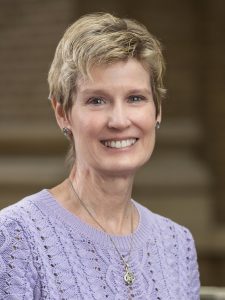 Snapshot of a Scientist
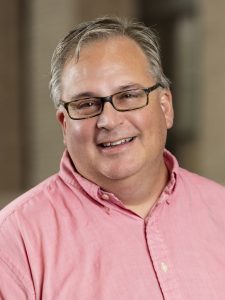 Congratulations to Dr. Jim Janetka, whose promotion to Professor was officially approved on September 11, 2020.
 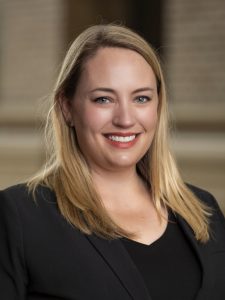 Dr. Natalie Niemi joined the Department on July 1, 2020, as an Assistant Professor on the Investigator Track. Her lab will investigates how mitochondria are built, regulated, and maintained across physiological contexts. We blend biochemistry, systems biology, and physiology to understand mechanisms of mitochondrial regulation and how they influence metabolism and organellar function. Using insights gained from our molecular studies, we aim to understand how mitochondrial dysfunction contributes to mammalian pathophysiology, with the long-term goal of translating our discoveries into new therapeutic options to restore mitochondrial function in human disease.
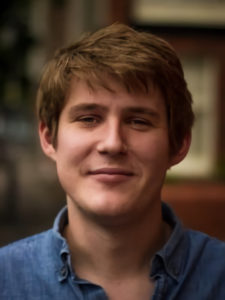 Dr. Alex Holehouse joined the Department on January 1, 2020, as an Assistant Professor on the Investigator track. His lab will explore how intrinsically disordered protein regions confer biological function and how this goes wrong in disease. The lab integrates physics-based models (all-atom and coarse-grained simulations) with informatics and machine learning to develop sequence-specific predictions. They then test those predictions either within the lab or with collaborators around the world.
 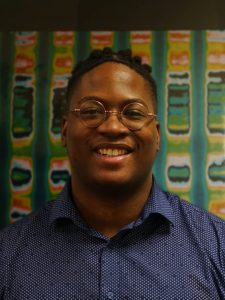 Jhullian Alston (JJ) is a fourth-year graduate student in the Biochemistry, Biophysics, and Structural Biology (BBSB) program. He is completing his Ph.D. thesis work jointly between the labs of Dr. Andrea Soranno and Dr. Alex Holehouse, where he combines computational biophysics with single-molecule fluorescence spectroscopy to understand how intrinsically disordered regions within a protein can affect interactions with both proteins and nucleic acids.
 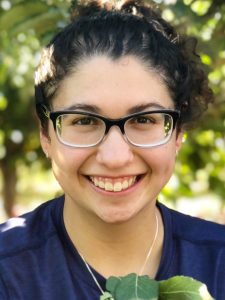 Jasmine is a fourth-year graduate student in the Biochemistry, Biophysics, and Structural Biology (BBSB) program. She is doing her PhD thesis work in the lab of Dr. Andrea Soranno, where she studies how sequence composition of intrinsically disordered regions within a protein can affect interactions with both proteins and nucleic acids using single-molecule fluorescence spectroscopy.