
Author: Nicholas Caito

Dr. Mary Elizabeth Mathyer


Seminar Title: Elucidating Enhancer Function in Epidermal Development
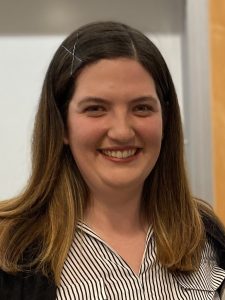
Biography

Dr. Mary Elizabeth Mathyer received her B.A. in Biology and Theatre Arts from Kalamazoo College in 2014. After graduation, Dr. Mathyer joined the Molecular Genetics and Genomics program in the Division of Biology and Biomedical Sciences at Washington University in St. Louis. (more…)
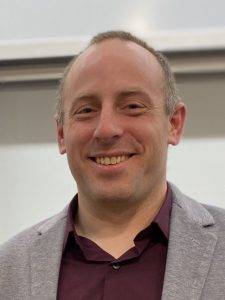

Dr. Brian Lananna


Seminar Title: “Highlights from “The degenerating star clock”: Astrocytes, Alzheimer’s disease, and the circadian clock”

Biography:

Dr. Brian Lananna received his B.A. in Psychology from Dartmouth College before joining the Division of Biological and Biomedical Sciences at Washington University as a Neuroscience graduate student in 2014. At Washington University, Dr. Lananna studied circadian clock regulation of astrocytic and microglial immune activation in the context of aging and Alzheimer’s disease in the lab of Dr. Erik Musiek in the department of Neurology. He was able to show that the circadian clock within astrocytes cell autonomously regulates astrocyte activation. Dr. Lananna has also demonstrated that a previously known Alzheimer’s biomarker, Chi3l1 (YKL-40) is regulated in astrocytes by the circadian clock. Further, he discovered that suppression of this protein can suppress beta-amyloid deposition in a mouse model and is associated with slower disease progression in humans with Alzheimer’s disease. Dr. Lananna defended his thesis, entitled “The degenerating star clock: Circadian clock regulation of astrogliosis and implications for Alzheimer’s disease” on April 10, 2019. (more…)

Regulation of normal and malignant B cells by the tetraspanin CD53

January 17th, 2020 – Weikai Li, PhD, Associate Professor of Biochemistry and Molecular Biophysics, along with Laura Schuettpelz, MD, PhD, Associate Professor of Pediatrics, received an Interdisciplinary Research Initiatives grant award from the Children’s Discovery Institute for their work entitled “Regulation of normal and malignant B cells by the tetraspanin CD53”.

Heteroarylamide smoothened inhibitors: Discovery of N-[2,4-dimethyl-5-(1-methylimidazol-4-yl)phenyl]-4-(2-pyridylmethoxy)benzamide (AZD8542) and N-[5-(1H-imidazol-2-yl)-2,4-dimethyl-phenyl]-4-(2- pyridylmethoxy)benzamide (AZD7254).

Yang B., Hird A.W., Bodnarchuk M.S., Zheng X., Dakin L., Su Q., Daly K., Godin R., Hattersley M.M., Brassil P., Redmond S., John Russell D., & Janetka J.W. (2020). “Heteroarylamide smoothened inhibitors: Discovery of N-[2,4-dimethyl-5-(1-methylimidazol-4-yl)phenyl]-4-(2-pyridylmethoxy)benzamide (AZD8542) and N-[5-(1H-imidazol-2-yl)-2,4-dimethyl-phenyl]-4-(2- pyridylmethoxy)benzamide (AZD7254).” Bioorg Med Chem. 2020 Jan 15;28(2):115227. doi: 10.1016/j.bmc.2019.115227. Epub 2019 Dec 11. (Abstract)

The Tetraspanin CD53 Regulates Early B Cell Development by Promoting IL-7R Signaling.

Zev J. Greenberg, Darlene A. Monlish, Rachel L. Bartnett, Yihu Yang, Guomin Shen, Weikai Li, Jeffrey J. Bednarski, & Laura G. Schuettpelz. (2020). “The Tetraspanin CD53 Regulates Early B Cell Development by Promoting IL-7R Signaling.” J Immunol. 2020 Jan 1;204(1):58-67. doi: 10.4049/jimmunol.1900539. Epub 2019 Nov 20. (Abstract)

Dr. Sarem Hailemariam


Seminar Title: Yeast cell cycle checkpoint regulation in response to DNA breaks and short telomeres

Biography

Sarem received her undergraduate degree in Biology from Shaw University in Raleigh, North Carolina. She joined the Division of Biological and Biomedical Sciences at Washington University in St. Louis in 2012 as part of the Molecular Cell Biology program. Sarem has always been interested in mechanisms employed by different organisms to maintain genome integrity. Prior to joining DBBS, Sarem worked on the mammalian DNA replication origin-licensing factor, Cdt1. (more…)

Ribosomal Protein L11 Selectively Stabilizes a Tertiary Structure of the GTPase Center rRNA Domain.

Welty R., Rau M., Pabit S., Dunstan M.S., Conn G.L., Pollack L., & Hall K.B. (2019). “Ribosomal Protein L11 Selectively Stabilizes a Tertiary Structure of the GTPase Center rRNA Domain.” J Mol Biol. 2019 Dec 24. pii: S0022-2836(19)30710-7. doi: 10.1016/j.jmb.2019.12.010. [Epub ahead of print] (Abstract)

The Aminoalkylindole BML-190 Negatively Regulates Chitosan Synthesis via the Cyclic AMP/Protein Kinase A1 Pathway in Cryptococcus neoformans.

Maybruck B.T., Lam W.C., Specht C.A., Ilagan M.X.G., Donlin M.J., & Lodge J.K. (2019). “The Aminoalkylindole BML-190 Negatively Regulates Chitosan Synthesis via the Cyclic AMP/Protein Kinase A1 Pathway in Cryptococcus neoformans.” mBio. 2019 Dec 17;10(6). pii: e02264-19. doi: 10.1128/mBio.02264-19. (Abstract)